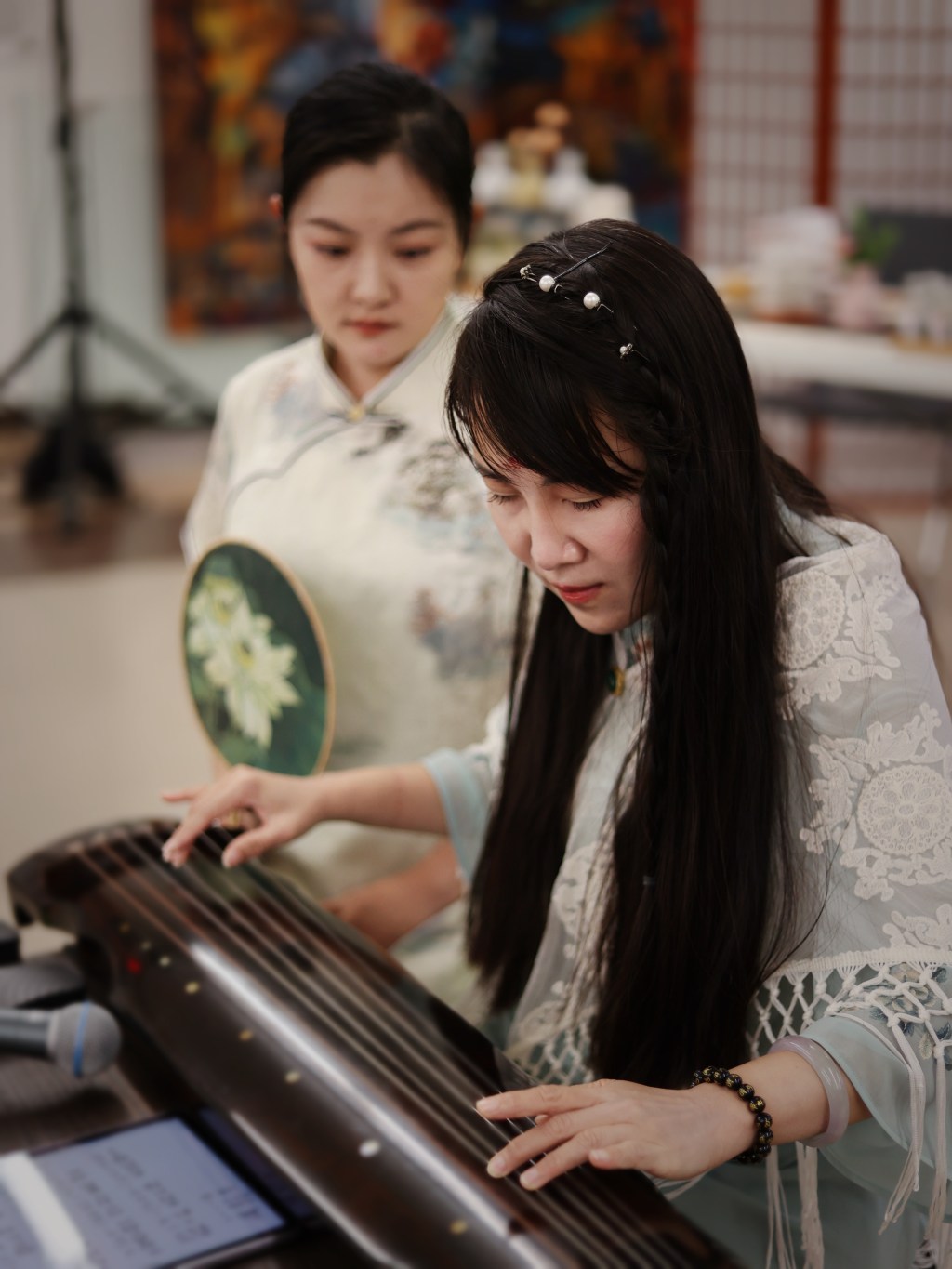
琴簫教學視頻:Qin Xiao Ensemble lesson video:
- 寒山僧蹤 https://youtu.be/5A3rQfoir9U?si=tD8Dyg2HQQFXYXyL
- 鳳求凰 https://youtu.be/c3LjTLaU97c?si=Uwh0cABS_la8cW9r
- 關山月 https://youtu.be/dTM8o3VJbl0?si=W2XIey-AYZzr6_qz
- 琴簫合奏如何調弦 https://youtu.be/uXSRgTca3Jw?si=FRLjC-XhXlazGRM9
琴簫合奏演奏視頻:Qin Xiao Ensemble video:
1.半山聽雨 https://youtu.be/-ZPUd4NFv_A?si=Zeb35t2872xHkMe9
2. 鳳求凰 https://youtu.be/iso-k6S8Axc?si=_Na2n6j7DUV856i_
3.關山月 https://youtu.be/HcOJ63VAIGo?si=nV9i-7sC9gtDkmQu
4. 陽關三疊 https://youtu.be/0wZi5cUMIuk?si=6p3ywNB2qDgaXQ0D
5.憶故人 https://youtu.be/1MsB3avwnQc?si=C0AyZPaD2ckT-dA-
6.普安咒 https://youtu.be/h4R9aArL9UQ?si=ba2OB_xJOd_TjFow
(一)左琴右書—中國傳統文人的審美情趣
中國傳統音樂表演形式——琴簫合奏根據考據在漢代已經十分常見,漢代的樂俑和繪畫材料便可作為佐證,這是琴學專家在20世紀50年代所考證的。 漢代之後,琴簫合奏的形式不復常見,直到清代開始復興,近現代發展迅速,是除了古琴獨奏之外,最常出現在古琴音樂會或雅集的一種表演形式。由於歷史原因及各地方流派所使用的律制不同,使得琴簫合奏一度因為音律不合調,致使琴簫合奏不能大規模推廣。直到近代古琴大師彭祉卿和查阜西为便于琴箫合奏,在上个世纪三十年代发明并制作了“雅箫”(今称为琴箫)才又讓琴簫合奏這種失傳的音樂“遺珠”從歷史的“滄海”中重現出來。
The Aesthetic of Traditional Chinese Literati
The traditional Chinese musical ensemble of qin (guqin) and xiao (bamboo flute) dates back to the Han Dynasty, evidenced by musical figurines and paintings from that era, verified by qin scholars in the 1950s. After the Han Dynasty, this form of duet became rare until its revival during the Qing Dynasty and its subsequent development in modern times. Apart from solo performances, qin and xiao duets are now a prominent feature in guqin recitals and gatherings.
Historical reasons and regional differences in tuning systems once made qin and xiao ensembles challenging due to discrepancies in pitch. In the 1930s, guqin masters Peng Zhiqing and Zha Fuxi created the “Ya Xiao” (now known as the “Qin Xiao”) to harmonize with the guqin, reviving this lost tradition.
(二)琴韻簫聲傳古音
左琴右書是傳統文人的精神瑰寶,體現的正是中華民族的對知識及藝術的尊重和追求。常言道“ 君子無故不撤琴”,正因為古琴有修煉身心的功效,才可以通過日常長年累月的彈奏,養出浩然正氣。簫聲溫柔低沉,用來搭配古琴,更能表達出中國傳統音樂的最高審美情趣—— 中正平和,大音希聲,天人合一。
墨香如月兩位成員都是從小學習中國傳統文化和音樂,對傳統文化有著發自內心的喜愛,正因為內心這份熾熱的感情,使得她們幾十年如一日的學習,表演和宣傳中國傳統文化和音樂。
中國傳統音樂博大精深,種類繁多,之所以著重於古琴和簫的演奏和傳播的主要原因有:
- 古琴歷史悠久,保留的資料最全(無論是琴譜還是古琴技法及審美,音律相關的書籍和傳世資料)。這些資料不但對中國音樂有很大的研究價值,對中國的哲學思想,審美及律學等都有很高的參考價值。
- 獨一無二的記譜方法,使得大量古曲得以保留至今(大量的明朝和清朝的古琴曲,還有小量的宋朝古琴曲,甚至唐朝的古曲。)古琴的記譜方法又叫“減字譜”有別於今天流行使用的“五線譜”和“簡譜”。因為古琴譜只記載了指法,跟現在紀錄旋律和節奏的譜很不相同。因為文人喜歡彈古琴,他們大量抄寫和傳播琴譜和古琴學習書籍,使得兩千年後的今天,我們可以仍然沿用這種傳統的方法去學習古琴技藝。而不像其他傳統樂器要靠看“五線譜”或“簡譜”並且需要用西方的音樂理論來學習中國傳統音樂。在經歷了近代對中國傳統文化的斷層繼承後,古琴幾乎成了唯一沒有文化斷層的中國音樂形式。
- 簫韻悠長,真意需細品嘗
洞簫因為音色柔和,穿透性強,音量較小,與古琴一樣,被傳統文人視為君子的象徵,亦是用來修鍊的最好法器。古琴在發明之初,就是聖人用來教化眾生的道器,這與其他樂器的發明初衷很不同。因而其音量不大,音色低沉,琴曲往往也比較緩慢和平和,更適合一個人在家慢慢弄弦或三五知己品茶賞樂。與現代流行和西方音樂側重的旋律優美,節奏明快,或者氣勢恢宏,追求大氣不同,中國傳統音樂更講究韻味。很多人覺得傳統音樂動不動就講韻味是很虛的事情,其實這與中國傳統音樂與西方音樂的審美建立在不同哲學體系下,有很大的關係。在傳統的哲學理念中,萬物生於虛無,所以音樂的最高境界就是從新歸與“虛無”,只有這樣才能真正的達到“天人合一,物我和諧“。但是這裡所說的虛無不是真正的“虛”和“無”,韻味也不是隨便亂彈琴,而是過盡千帆,曆盡磨難之後的“返璞歸真”。所有的技法練熟後,忘記技法,順心而彈,自然就接近“道法”。
Melodies of the Qin and Xiao Bringing Ancient Sounds to Life
Zuo Qin You Shu, representing the qin on the left and book on the right, encapsulates the intellectual pursuits and artistic elegance of Chinese literati. The guqin, known for cultivating the mind and spirit, embodies virtues such as harmony and righteousness. Its pairing with the xiao, known for its gentle and serene tone, reflects the highest aesthetic ideal of traditional Chinese music—balance, tranquility, and the unity of humanity and nature.
The members of MXRY have dedicated decades to the study, performance, and promotion of traditional Chinese culture and music, driven by a profound love for their heritage. Their focus on the guqin and xiao is rooted in several reasons:
- Historical Significance of the Guqin:
The guqin, with its comprehensive documentation (notations, techniques, and theories), serves as a vital resource not only for music but also for Chinese philosophy, aesthetics, and acoustics. - Unique Notation System:
The guqin’s “jianzipu” notation preserves ancient melodies from the Tang, Song, Ming, and Qing Dynasties, allowing modern players to connect with tradition without reliance on Western music theory. Unlike other instruments, the guqin has remained a continuous cultural thread despite disruptions in China’s history. - Profound Charm of the Xiao:
The xiao, symbolizing the virtues of the gentleman, complements the guqin with its soft yet penetrating sound, making it an ideal instrument for introspection and refinement.
Traditional Chinese music, unlike its Western counterpart, emphasizes subtlety and depth, aiming for harmony with nature and the universe. The pursuit of this philosophy, known as “returning to simplicity,” seeks to unify the self and the cosmos through music.
Hopes for the Future
Promoting and preserving traditional music and culture is a lifelong mission. From feeling isolated in childhood due to a passion for traditional music, to discovering like-minded individuals, the journey has been transformative. This concert aspires to bring together more enthusiasts, turning what was once a lonely path into a shared cultural endeavor.
 San Francisco Guqin and Xiao Music Society